

September 23, 2025
Uganda Safari — 2026 Guide for First Time Visitors

Uganda is a compact, biodiversity-rich safari destination where primates, plains game, dramatic rivers and lush forests meet a warm, accessible infrastructure for visitors in 2026. This guide gives you a one-stop, evidence-based handbook for planning, booking and enjoying a responsible Uganda safari using only official sources and government authorities. [1][15]
Key facts
- Capital / gateway: Kampala (Entebbe International Airport for international flights). [15]
- Lead authority for parks: Uganda Wildlife Authority (UWA). [1]
- Gorilla trekking: Bwindi Impenetrable National Park and Mgahinga Gorilla National Park. [3][8]
- Official permit and tariff source: UWA Conservation Tariff (July 2024–June 2026) (official PDF). [1]
- Tourist visa: Apply via Uganda’s e-visa portal (Directorate of Citizenship & Immigration Control). [10][11]
- Health highlights: Yellow fever vaccination required in practice for entry/exit checks per national programs; malaria prophylaxis strongly recommended. Confirm with Ministry of Health and CDC guidance. [12][13]
- Best months: Two dry seasons — December–February and June–September (best for wildlife viewing and primate tracking). [4][17]
- Official conservation law: Uganda Wildlife Act, 2019 (with amendments) defines UWA’s mandate and legal framework. [16]
Best months
- Optimal windows: December–February and June–September (the principal dry seasons), when animals concentrate around water and trails are easier for game drives and primate tracking. [4][17]
- Shoulder seasons: March–April and September–November bring short and long rains respectively; birding and lush landscapes can be excellent but roads and trails may be muddy. UWA advises seasonal differences per park. [4][17]
Permit / park fee highlights (official)
- The Uganda Wildlife Authority (UWA) Conservation Tariff (July 2024–June 2026) is the authoritative schedule for entrance fees, activity fees and permits for national parks and UWA-managed attractions; this is the primary source for all park charges. [1]
- Gorilla tracking permits (UWA schedule): US$700 per person for non-residents (FNR = Foreign Non-Resident) as listed in the UWA Conservation Tariff (July 2024–June 2026). The tariff also lists a higher fee for habituation experiences (where available). These fees include the guide and community contribution as specified. [1][2]
- Chimpanzee tracking permits and other activity fees and entrance rates are explicitly listed in the UWA tariff documents for each park. Bookings and permit allocation procedures are governed by UWA guidelines. [1][2]
- Self-drive vs guided game drives: UWA tariffs include vehicle and per-person rates for self and guided drives and specify mandatory UWA guides for certain activities (e.g., night drives). Check the tariff PDF for park-specific vehicle/boat rules. [1]
Important: Because the UWA conservation tariff is the legal schedule for fees and activities, always confirm the exact tariff PDF (UWA) for your travel dates; the July 2024–June 2026 PDF cited here is the current authoritative tariff for this period. [1]
1. Why go on safari in Uganda?
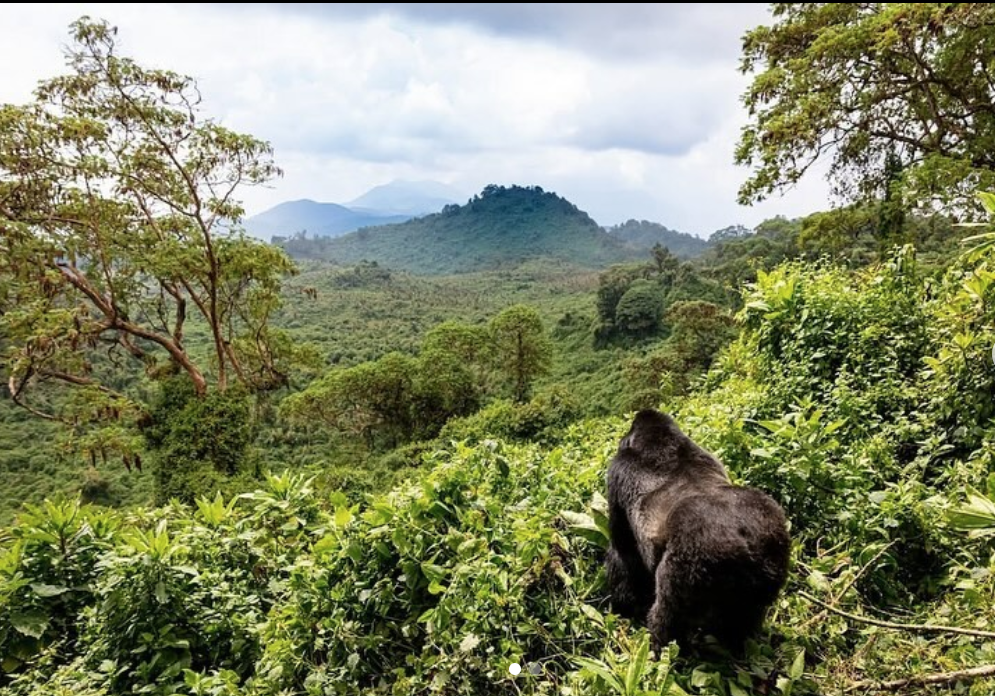
Uganda offers a concentrated, high-value safari experience that combines world-class primate encounters with classic East African savannah wildlife and exceptional birding — all within relatively short driving distances. Bwindi Impenetrable National Park and Mgahinga protect mountain gorillas that are among the planet’s most treasured wildlife experiences; Uganda is one of only three countries in the world where legally sanctioned mountain gorilla trekking occurs. [3][8]
Ecologically, Uganda sits at a crossroads of Central, East and West African habitats: ancient montane forests, Albertine Rift endemics, expansive savannahs in the north and the Nile corridor at Murchison Falls. These overlapping ecosystems produce high biodiversity per square kilometer, including rare endemics, large primate populations and rich migratory bird assemblages. UWA and the Ministry of Tourism manage these places with conservation plans and statutory tariffs that channel revenue back into protection and local communities. [1][4][5][16]
Tourism has real conservation leverage in Uganda. Revenue from permits and park fees — as set out in UWA’s official tariff schedule — funds anti-poaching patrols, park infrastructure, community projects and habitat protection. Responsible, legally compliant tourism therefore produces measurable conservation outcomes: it finances rangers and community benefit programs while providing alternatives to extractive land uses. The legal framework (Uganda Wildlife Act) and UWA’s management plans codify that relationship between tourism income and conservation work. [1][16]
2. Quick planning checklist
- Read the UWA Conservation Tariff (July 2024–June 2026) and the UWA primate-tracking guidelines before booking permits. [1][2]
- Book gorilla permits well in advance (availability limits — see UWA guidance). [1][2]
- Start visa application via the Uganda e-visa portal if required — confirm nationality-specific rules. [10][11]
- Confirm yellow fever vaccination status and carry official certificate where required; consult Ministry of Health and CDC. [12][13]
- Purchase malaria prophylaxis and travel insurance that includes emergency evacuation. Check Ministry of Health and CDC recommendations. [12][13]
- Arrange internal flights early for remote parks (Kidepo, Kisoro/Kisoro airstrip). [15]
- Pack layered clothing, good hiking shoes, rain jacket, binoculars and a high-quality camera. (See full packing list below.)
- Bring proof of gorilla/chimpanzee permits and printed copies of hotel and transfer confirmations — UWA permit checks may occur at park entry. [1][2]
3. Permits, fees & how to book (official procedure)
Where the rules and costs are published
All official fees, permit types, conditions and booking procedures for UWA-managed parks are published by Uganda Wildlife Authority in its conservation tariff PDFs and in the UWA Guidelines for Management of Gorilla and Chimpanzee Tracking (UWA). Always refer to the current UWA PDF for the legal tariff in force on your travel dates. [1][2]
Permit types and typical official fees (examples from the UWA 2024–2026 tariff)
- Gorilla tracking permit (tourism): listed at US$700 per person for foreign non-residents in UWA Conservation Tariff (July 2024–June 2026). This fee includes the guide and community contribution as specified in the tariff. [1]
- Gorilla habituation experience: a separate, higher fee (UWA tariff lists habituation experience at higher USD rates) and specific procedural rules in UWA guidelines. [1][2]
- Chimpanzee tracking: park-specific rates in the UWA tariff for Kibale, Budongo or other locations. [1]
- Park entrance fees and activity fees: UWA’s tariff PDF lists per-person, per-vehicle and boat fees for each park; night-drive fees and UWA vehicle hire rules are explicitly enumerated. [1]
Note: The tariff is the official schedule; the examples above are taken directly from the UWA Conservation Tariff (July 2024–June 2026). For exact pricing by nationality and status (FNR, FR, EAC, UGX), consult the tariff PDF. [1]
How to book permits (official route)
- Gorilla & chimp permits: UWA sells permits as described in its tracking guidelines and tariff schedules; follow the reservation and payment procedure set by UWA. The UWA guidelines outline reservation windows, allocations and authorized sellers. [2][1]
- Park entry fees and activity bookings: For UWA services, payments and bookings are administered via UWA’s official channels (UWA website and designated point-of-sale offices). [1]
- Visa / immigration: Apply for tourist visas and e-visas via the Directorate of Citizenship & Immigration Control portal (visas.immigration.go.ug). [10][11]
Peak-season demand and booking timeline
- Gorilla permits are limited in number and sell out months (and sometimes a year) in advance for peak months; book as early as possible. This is explicitly why UWA and its guidelines emphasize advanced reservations, particularly for gorilla trekking. [1][2]
- For national parks during December–February and June–September, lodges and internal flights fill fast; confirm bookings early. The Uganda Tourism Board and UWA recommend early reservations for high season. [15][1]
Cancellation & refund rules (official)
- Official UWA tariff and guidelines include terms about refunds, cancellation windows and rescheduling; consult the UWA tariff PDF and the UWA tracking guidelines for the exact cancellation policy relevant to the permit type you purchased. If the tariff/guideline does not state a clear national-level cancellation rule for a particular activity, UWA directs travelers to the specific booking terms associated with that permit or concession. [1][2]
Fraud and scam avoidance (official-minded steps)
- Only purchase permits directly via UWA or via licensed operators registered with Uganda Tourism Board (UTB) and clearly listed on UTB or UWA registries. UTB maintains registration and licensing information for tourism operators. [15][16]
- Verify permit confirmation numbers against UWA reservation systems or office contact points in Kampala or the park headquarters. UWA guidelines specify how permits are issued and validated. [2][1]
- Do not rely on unverified, non-official sellers who cannot point to a UWA booking reference or invoice. If in doubt, confirm with UWA central offices. [1][15]
If no UWA-authorized method or proof is provided by a seller, do not pay. Report suspicious vendors to UWA or UTB via their official contact points. [1][15]
4. Where to go — national parks & highlights (official UWA descriptions)
Below are the major parks and what each offers; descriptions and “best time” notes cite UWA park pages and management documents.
Bwindi Impenetrable National Park — gorillas & forest biodiversity
What to see: Mountain gorilla trekking, high bird diversity, forest mammal life and Batwa cultural experiences. [3]
Best time: Dry seasons (Dec–Feb, Jun–Sep) for easier trekking; year-round tracking available but trails can be wet. [4][17]
Activities: Gorilla tracking; community visits; birding; nature walks. [3]
Difficulty/access: Hiking ranges from moderate to strenuous depending on group habituation and trail steepness; visitors should be fit for 2–6 hour treks. [3]
Ideal for: Travelers prioritizing primate encounters and intimate forest experiences. [3]
Mgahinga Gorilla National Park — transboundary Virunga slopes
What to see: Mountain gorilla habituated group (limited), golden monkeys, volcanic scenery. [8]
Best time: Dry months June–July are particularly good; weather varies with elevation. [8]
Activities: Gorilla trekking (limited groups), golden monkey tracking, volcano hikes. [8]
Difficulty/access: High-altitude trails and steep ascents; suitable for fit trekkers. Flights to Kisoro airstrip are possible for quicker access. [8]
Ideal for: Combination with Bwindi or a short gorilla-focused trip. [8]
Queen Elizabeth National Park — mosaic landscapes & tree-climbing lions
What to see: Savanna plains, Kazinga Channel boat cruises (hippo, elephant, buffalo), the Ishasha sector (tree-climbing lions). [4]
Best time: Dry season (Jun–Aug, Dec–Feb) for game concentration; boat cruises year-round with seasonal water-level changes. [4]
Activities: Game drives, boat cruises on Kazinga Channel, birding, crater lakes and cultural visits. [4]
Difficulty/access: Good road links from Fort Portal and via Kasese; accessible for standard safari vehicles. [4]
Ideal for: Families, mixed-activity itineraries and combined chimp/gorilla trips. [4]
Murchison Falls National Park — the Nile’s dramatic cataract
What to see: Murchison Falls where the Nile squeezes through a narrow gorge; large concentrations of elephants, hippos, crocodiles and Uganda kobs. [5]
Best time: Dry seasons (Dec–Feb, Jun–Sep) when wildlife is easiest to sight. [5]
Activities: Game drives, boat trip to the base of the falls, community visits, sport fishing in designated areas. [5]
Difficulty/access: Long drive from Kampala (~4–6 hours); airstrip options exist. [5]
Ideal for: Classic big-game safaris with an iconic river feature. [5]
Kidepo Valley National Park — remote wilderness and seasonal big game
What to see: Wide open savannah, rare species (African wild dog sightings are possible historically), outstanding birdlife and traditional pastoralist cultures. [6]
Best time: Dry months (Dec–Feb) deliver strong wildlife viewing; the park is remote and often visited by air. [6]
Activities: Game drives, cultural encounters with Karamojong communities, guided walks. [6]
Difficulty/access: Remote roads; often visited by charter flights or long overland drives; best for travelers seeking solitude. [6]
Ideal for: Adventure travellers and experienced safari-goers who want solitude and wilderness. [6]
Lake Mburo National Park — accessible and diverse
What to see: Zebra, impala, topi, eland, hippos, and wetland birdlife; convenient distance from Kampala. [7]
Best time: Year-round; dry seasons ease game viewing and road travel. [7]
Activities: Guided night drives, boat cruises on Lake Mburo, canoeing. [7]
Difficulty/access: Short drive from Kampala/Mbarara; suitable for self-drive and short safaris. [7]
Ideal for: Short safaris, families, photographic wildlife beginners. [7]
Kibale Forest National Park — chimpanzee tracking (and primate biodiversity)
What to see: High density of primates including habituated chimpanzee communities. [4]
Best time: Year-round primate tracking, be prepared for afternoon rains in wet months. [4]
Activities: Chimpanzee tracking, Bigodi Swamp walk, birding. [4]
Difficulty/access: Forest trails can be muddy; moderate hikes. [4]
Ideal for: Primate enthusiasts and birders. [4]
Lesser-known reserves & special areas
- Rwenzori Mountains National Park for high-altitude trekking and unique alpine flora. [1]
- Semuliki National Park (western rift valley; excellent birding and hot springs). [4][18]
- Ziwa Rhino Sanctuary for re-introduced rhinos (managed under UWA guidance). [1]
(Each of the above descriptions is based on official UWA park pages and management PDFs; consult those original pages for the latest trail, access and activity rules.)
5. Sample realistic itineraries (with distances & transport realities)
The sample itineraries below are realistic, official-friendly plans using major parks. Distances and travel modalities are taken from UWA park descriptors and Uganda’s tourism guidance; internal flight options are noted where official park or tourism pages advise air access. [1][5][15]
Quick notes on travel times (official references)
- Kampala (Entebbe) → Murchison Falls NP southern entrance: ~300 km and a 4–6 hour drive depending on roads and stops. UWA park pages detail driving times and distances for each park. [5]
- Kampala → Bwindi (Southwestern sector): ~8–9+ hours by road depending on gate and route; many travellers use internal flights to Kisoro/nearby airstrips for time savings. UWA provides access details per park. [3][8]
- Kampala → Kidepo: long overland journey (often split over days) or domestic charter flights to Kidepo airstrip. UWA and UTB note the remoteness and recommend air options for tight itineraries. [6][15]
5-day concentrated gorilla & savannah (fast, focused)
Day 1: Arrive Entebbe/Kampala; overnight in Kampala (brief city orientation). [15]
Day 2: Fly or drive to Kisoro area (if flying, short domestic flight) or drive via Kabale to Bwindi; rest and pre-trek briefing. [8][15]
Day 3: Gorilla trek (Bwindi or Mgahinga depending on permits); afternoon community/Batwa cultural experience. (Permit required — UWA tariff applies.) [1][3]
Day 4: Transfer to Lake Mburo or Queen Elizabeth (drive depending on route); afternoon boat cruise or game drive. [7][4]
Day 5: Game drive/return to Kampala at leisure or connect to Entebbe for departure. [15]
8–10 day classic Uganda circuit (gorillas, chimps, savannah)
Day 1: Arrive Entebbe, overnight Kampala. [15]
Day 2–3: Drive/transfer to Kibale for chimpanzee tracking and Bigodi swamp walk. [4]
Day 4–5: Continue to Queen Elizabeth National Park — game drives in Kasenyi sector and Kazinga Channel boat cruise. [4]
Day 6: Transfer to Bwindi (gorilla trek next day) or drive via Ishasha for tree-climbing lion viewing. [3][4]
Day 7: Gorilla trek (Bwindi); afternoon relax. [3]
Day 8–9: Return toward Kampala with optional stop at Lake Mburo for a boat trip or night game drive. [7]
Day 10: Depart Entebbe. [15]
12–14 day extended — includes Murchison & Kidepo (more road / flight mix)
Day 1–2: Arrive Kampala; transfer to Murchison Falls (drive or fly); boat cruise to the falls (base) and evening game drive. [5]
Day 3–4: Explore Murchison and surrounding habitats; optional Nile launch. [5]
Day 5–6: Fly or drive back to Kampala and onward to Kibale for chimps. [4][15]
Day 7–8: Queen Elizabeth and Bwindi (gorilla trek). [4][3]
Day 9–11: Fly north to Kidepo Valley (recommended flight for time efficiency); game drives and cultural visits. [6]
Day 12–14: Return to Kampala via internal flight, buffer day for connection; depart Entebbe. [15][6]
6. Costs & budgeting (officially grounded framework)
All specific permit and park charges below are taken directly from the UWA Conservation Tariff (July 2024–June 2026) unless otherwise noted. [1]
Big-ticket official items
- Gorilla permit (UWA, FNR): US$700 per person as listed in UWA 2024–2026 tariff. Book early. [1]
- Gorilla habituation experience: higher fee listed in UWA tariff; consult the tariff PDF for exact habituation pricing and availability. [1][2]
- Park entrance fees, activity charges, vehicle/boat fees: listed for each park in UWA tariff. Prepare for per-person and per-vehicle charges depending on self-drive or guided options. [1]
Typical daily cost bands (official + practical guidance)
These bands depend on accommodation tier, transport choices and activities. UWA publishes park fees but not private lodge rates; UTB lists registered operators and graded hotels but commercial rates vary. For official tariff items, use the UWA PDF; for accommodation and transport budgeting, consult UTB-licensed operator listings and hotel rate cards. [1][15]
- Budget traveller: Focus on UWA cottages, shared transfers and self-drive where allowed — expect lower nightly costs for accommodation (UWA cottages) but still pay UWA entrance/activity fees. [1]
- Comfort / mid-range: Lodge accommodation outside parks, private guided game drives, internal flights where needed. Expect higher lodging rates plus UWA fees. [15][1]
- Luxury: Exclusive lodges, private concessions, charter flights — UWA fees remain the same for park access but lodge & charter prices are commercial and set by operators. UTB maintains registered lodge lists but does not set private rates. [15]
Money-saving strategies
- Travel in shoulder months to secure lower commercial lodge tariffs while park fees remain official and constant. [1][15]
- Combine parks in overland circuits to reduce internal flight costs, but weigh road-time vs comfort and park time. UWA park pages provide practical driving distances and expected transfer times. [1][5][6]
- Use UWA budget cottages or community-run guesthouses where available (UWA lists its managed accommodation on park pages) to lower lodging costs while still paying official park fees. [1][7]
7. Practical logistics
How to get there (official entry points)
- International arrival: Entebbe International Airport (Kampala area) is Uganda’s principal international gateway; most itineraries start/end here. [15]
- Visa & entry: Apply for tourist visas via Uganda’s e-visa portal and confirm entry requirements with the Directorate of Citizenship & Immigration Control. [10][11]
Internal flights & transfers (official advice)
- UWA and UTB note domestic commercial flights to airstrips close to Bwindi (Kisoro), Murchison (Pakuba/Kichwamba), Kidepo and other remote parks as time-saving options; flight schedules and operators are commercial but airports and airstrips are listed on UWA/UTB pages. [1][15]
- For remote parks like Kidepo, official guidance often recommends flight access due to long overland times; check UWA access pages for the current road and air options. [6][15]
Road conditions & driving
- UWA park pages include driving time guidance for each park; many roads to parks in the west and north can be rough or seasonal, so plan accordingly. For example, Murchison is ~4–6 hours from Kampala by road per UWA. [5]
- If self-driving, ensure your rental insurance covers off-road and park access and confirm UWA vehicle rules in the tariff PDF. UWA details vehicle class rules and prohibited vehicles. [1]
Accommodation types
- UWA publishes a list of UWA-run cottages and campsites and works with licensed private lodges; UTB maintains registration and grading of private accommodation. Use UWA and UTB to verify licensed facilities. [1][15]
Connectivity, ATMs and money
- UWA and UTB do not set commercial banking rules, but UTB guidance and UWA park pages note that remote parks may have limited connectivity and ATM access; carry adequate cash (US dollars for permit payments only where accepted) and confirm payment methods with UWA or the park office. [1][15]
- Many UWA payments and permit bookings have official online or HQ payment channels — verify accepted payment methods on the tariff PDF and UWA booking instructions. [1]
Tipping norms (official guidance)
- No official national tipping scale appears in UWA or UTB documents as of January 26, 2026. If an official tipping guideline is required, UWA/UTB suggest travelers check operator terms or ask lodge managers; however, no centralized official tipping schedule was found in UWA/UTB/Ministry-issued materials as of 26 Jan 2026. Secondary hospitality advice varies. (See “No official guidance found…” note below.) [1][15]
No official guidance found on tipping norms as of 2026-01-26; secondary sources conflict.
8. Safety, rules & etiquette (official park rules)
Official park rules (UWA)
- UWA tariff & guidance documents and the UWA wildlife pages include explicit conduct rules: keep safe distances from wildlife, do not feed animals, respect trail limits, follow rangers’ instructions and carry valid permits. [1]
- Specific primate interaction rules (gorillas and chimpanzees) are set out in UWA guidelines: maintain a minimum distance (commonly a 7-metre buffer for gorillas as listed in UWA materials), visits limited to one hour per group, no eating or littering while with the animals, and no flash photography; follow guide and ranger instructions at all times. [2][1]
Wildlife distance rules (official)
- Gorilla-distance rule: UWA guidance specifies a recommended minimum distance (UWA entails 7m guidance in its official materials) and explains infection-risk mitigation measures while in proximity to apes. [2][1]
- Chimpanzee rules: Similar restrictions on duration and distance apply; UWA’s chimp/gorilla guidelines define these measures in detail. [2]
Photography rules (official)
- UWA tracking guidelines and tariff PDFs explicitly ban flash photography during gorilla treks and require visitor compliance with guide directions. [2][1]
Gorilla/chimp/large-animal interaction rules (official)
- UWA’s Gorilla and Chimpanzee Guidelines (July 2024) detail reservation, tracking, habituation protocols, maximum group sizes, permitted behaviors, and health precautions to minimize zoonotic risk. These are the authoritative rules for primate tourism. [2]
- UWA also details maximum group sizes (often up to 8 visitors per gorilla group for tracking) and a 1-hour viewing limit in the official tariff/guidelines. [1][2]
Cultural etiquette (official guidance)
- While UWA/UTB do not prescribe detailed social etiquette as law, UTB encourages respectful engagement with local communities and licensed community experiences; UWA community programs are formalized in management plans and community benefit statements. [15][1]
- General respectful behavior: ask before photographing people, accept local customs, and follow the guidance of community hosts during cultural visits. UTB and UWA stress licensed and responsible community tourism as best practice. [15][1]
9. Responsible travel & conservation (official mechanisms)
How tourism revenue supports ecosystems (official)
- UWA’s tariff receipts fund park management, anti-poaching efforts, community development contributions and conservation initiatives as laid out in UWA strategic documents and the Conservation Tariff. The Uganda Wildlife Act also directs revenue use within the statutory wildlife funding framework. [1][16][2]
- UWA strategic and management plans outline revenue allocation to rangers, infrastructure, community revenue-sharing and conservation projects. [2][16]
Practical responsible-travel behaviors (officially encouraged)
- Purchase official permits and pay park fees through UWA or licensed UTB/MTWA channels. [1][15]
- Use registered guides and licensed operators (UTB registration is the benchmark). [15]
- Minimize disease transmission risk to wildlife: stay the required distance from apes, avoid visiting if you are sick, follow UWA health safeguards in their tracking guidelines. [2]
- Reduce single-use plastic and avoid feeding wildlife. UWA rules prohibit feeding animals and require waste control in parks. [1]
- Participate in community-run experiences that are listed by UTB/UWA to ensure benefits to local people. [15][1]
10. What to pack — detailed checklist
Essentials (officially sensible & park-tested)
- Passport, printed visa/e-visa confirmation and printed UWA permit confirmations (UWA may check permits at park HQ). [10][1]
- Proof of yellow fever vaccination (see Ministry of Health & WHO guidance); carry international certificate of vaccination where applicable. [12][14]
- Malaria prophylaxis (prescription) and insect repellent. CDC and Ministry of Health strongly recommend malaria prevention for Uganda. [12][13]
- Sturdy hiking boots, gaiters (for muddy trails), lightweight rain jacket, warm layer for evenings in highlands (Bwindi, Rwenzori). [3][8][4]
- Binoculars, camera (telephoto lens recommended), spare batteries and memory cards (battery charging may be limited in remote areas). [15]
- Small daypack for treks, water bottle, snacks, headlamp. [15]
- Basic first-aid kit and personal medications; travel insurance documents. [12][13]
- Cash in small denominations (for local purchases), but rely on official UWA digital payment channels for permit purchases where available; verify accepted currencies with UWA and lodging providers. [1][15]
Specialist items
- For gorilla tracking: light gloves (if advised), face masks (to reduce respiratory disease transmission; UWA guidance covers hygiene practices near primates). [2]
- For high-altitude trekking (Rwenzori): proper thermal layers and crampons as required by the route; consult UWA/Rwenzori guidance for seasonal requirements. [1]
11. Health & vaccinations — verified official guidance
All health and vaccination statements below are tied to Ministry of Health (Uganda), WHO and CDC guidance; where national-level entry rules exist, Ministry of Health or the Directorate of Citizenship and Immigration would post them. [12][14][13]
Yellow fever
- Yellow fever vaccination is recognized as an important traveler vaccine for Uganda. Uganda’s Ministry of Health has actively run national yellow fever vaccination campaigns and maintains records for vaccination verification; travelers should carry an International Certificate of Vaccination (yellow card) if required by transit/connecting nations. Official Ministry of Health resources provide vaccination center and verification tools. [12][19]
- Official guidance: Consult the Ministry of Health verification pages and the WHO travel vaccine pages for current mandatory or recommended yellow fever requirements. [12][14]
Routine & recommended vaccines
- Routine vaccinations (MMR, DTP, polio, etc.) should be up to date per WHO travel vaccine guidance; check WHO and Ministry of Health recommendations. [14][12]
Malaria & vectorborne disease
- The CDC recommends prescription antimalarial prophylaxis for travelers to Uganda and notes that malaria transmission occurs in all areas of Uganda; the CDC Traveler’s Health page lists recommended prophylactic regimens and advice to consult a healthcare provider. [13]
- Use insect repellent, sleep under insecticide-treated nets where necessary and follow anti-bite practices. [12][13]
Ebola & other outbreak considerations
- As of January 26, 2026 there have been recent public health events in Uganda (e.g., Ebola responses in recent years); always check the Ministry of Health, WHO, and CDC travel pages for the latest outbreak notices and entry/exit protocols before travel. [12][13][14]
- If no national-level travel restriction or mandatory screening is posted by the Ministry of Health or Directorate of Immigration, the legally binding rules are the government notices posted on those official sites; consult them directly for last-minute changes. [12][11]
Emergency medical care
- Uganda’s major cities have hospitals and private clinics, but remote park regions have limited on-site care. UWA and UTB recommend travelers to carry first-aid kits and secure comprehensive travel insurance covering medical evacuation when trekking gorillas or visiting remote parks. UWA tracking guidelines include health precautions for primate tourism. [1][2][15]
If an official, nationally mandated vaccine requirement for entry is not explicitly posted by the Ministry of Health or Directorate of Immigration (e.g., an active entry rule requiring a particular vaccine), this guide will state that directly with the date. (See “No official guidance found…” notation where applicable.)
12. FAQs
- Do I need a visa to visit Uganda?
Apply via Uganda’s e-visa portal; nationality-based rules apply — check the Directorate of Citizenship & Immigration Control for your specific requirements. [10][11] - How do I book a gorilla permit?
Purchase gorilla permits through UWA’s official channels per the UWA Conservation Tariff and the UWA tracking guidelines; do not purchase from unverified sources. [1][2] - How far in advance should I book a gorilla permit?
Book as early as possible, especially for peak months; UWA’s guidelines emphasize early reservation due to limited quotas. [1][2] - Is yellow fever vaccination required?
Travelers should consult the Ministry of Health and WHO recommendations; carry an International Certificate of Vaccination where required and verify the latest Ministry guidance. [12][14] - What are the gorilla viewing rules?
UWA guidelines set limits: typically a maximum group size (often eight people), a one-hour viewing limit, and a minimum distance rule (7 meters in UWA guidance); follow ranger instructions. [2][1] - Can I self-drive in national parks?
Some self-drive options exist with specific vehicle class rules in the UWA tariff; UWA also mandates guides for certain activities (e.g., night drives). Check the UWA tariff PDF for vehicle rules. [1] - What is the official price of a gorilla permit?
The UWA Conservation Tariff (July 2024–June 2026) lists gorilla permits at US$700 for foreign non-residents; consult the tariff PDF for status-based rates and habituation fees. [1] - Are rhino or other reintroduced species available to see?
The Ziwa Rhino Sanctuary (managed under UWA frameworks) reintroduced rhinos; consult UWA for current viewing rules and site openings. [1] - How reliable is park internet / phone coverage?
Coverage is limited in remote parks; UWA and UTB advise travelers that connectivity can be intermittent and recommend carrying offline maps and communication plans. [1][15] - Are there official guidelines for tipping?
No centralized official tipping schedule was found on UWA/UTB/Ministry pages as of 2026-01-26; check your lodge/operator terms or ask at check-in. [1][15]
References
(Each reference below is an official government or public authority domain. PDFs are marked. Numeric inlinks in the article map to these URLs.)
- Uganda Wildlife Authority — UWA Conservation Tariff (July 2024–June 2026) (PDF). https://ugandawildlife.org/wp-content/uploads/2024/03/UWA-Conservation-Tariff-July-2024-June-2026.pdf (PDF)
- Uganda Wildlife Authority — Guidelines for the management of gorilla and chimpanzee tracking (July 2024) (PDF). https://ugandawildlife.org/wp-content/uploads/2024/07/Guidelines-for-the-management-of-gorilla-and-chimpanzee-tracking-JULY-2024.pdf (PDF)
- Uganda Wildlife Authority — Bwindi Impenetrable National Park official park page. https://ugandawildlife.org/national-parks/bwindi-impenetrable-national-park/
- Uganda Wildlife Authority — Queen Elizabeth National Park official park page. https://ugandawildlife.org/national-parks/queen-elizabeth-national-park/
- Uganda Wildlife Authority — Murchison Falls National Park official park page. https://ugandawildlife.org/national-parks/murchison-falls-national-park/
- Uganda Wildlife Authority — Kidepo Valley National Park official park page. https://ugandawildlife.org/national-parks/kidepo-valley-national-park/
- Uganda Wildlife Authority — Lake Mburo National Park official park page. https://ugandawildlife.org/national-parks/lake-mburo/
- Uganda Wildlife Authority — Mgahinga Gorilla National Park official park page. https://ugandawildlife.org/national-parks/mgahinga-gorilla-national-park/
- Uganda Wildlife Authority — UWA Rates & Tariff repository page (additional tariff PDFs). https://ugandawildlife.org/uwa-rates/
- Directorate of Citizenship & Immigration Control — Uganda Electronic Visa/Permit Application System (e-visa portal). https://visas.immigration.go.ug/
- Directorate of Citizenship & Immigration Control — Official Immigration website (visas & passes information). https://www.immigration.go.ug/
- Ministry of Health — Republic of Uganda — Ministry of Health official site (vaccination campaigns and travel health resources). https://health.go.ug/
- Centers for Disease Control and Prevention (CDC) — Travelers’ Health: Uganda. https://wwwnc.cdc.gov/travel/destinations/traveler/none/uganda
- World Health Organization (WHO) — Uganda country profile / travel vaccine guidance. https://www.who.int/countries/uga
- Uganda Tourism Board (UTB) — official site (registration of operators, tourism guidance, selected booking links). https://utb.go.ug/
- National Environment Management Authority (NEMA) hosting the Uganda Wildlife Act, 2019 (official Act PDF). https://www.nema.go.ug/en/wp-content/uploads/2025/06/Uganda_Wildlife_Act_2019.pdf (PDF)
- Uganda Wildlife Authority — Park-specific management PDFs & notes on seasonality (examples: Murchison, Mgahinga, Lake Mburo PDFs). https://ugandawildlife.org/wp-content/uploads/2024/05/MFNP-2018-4.pdf (PDF)
- Uganda Wildlife Authority — Semuliki National Park management PDF and park details. https://ugandawildlife.org/wp-content/uploads/2024/05/SNP-2018-4.pdf (PDF)